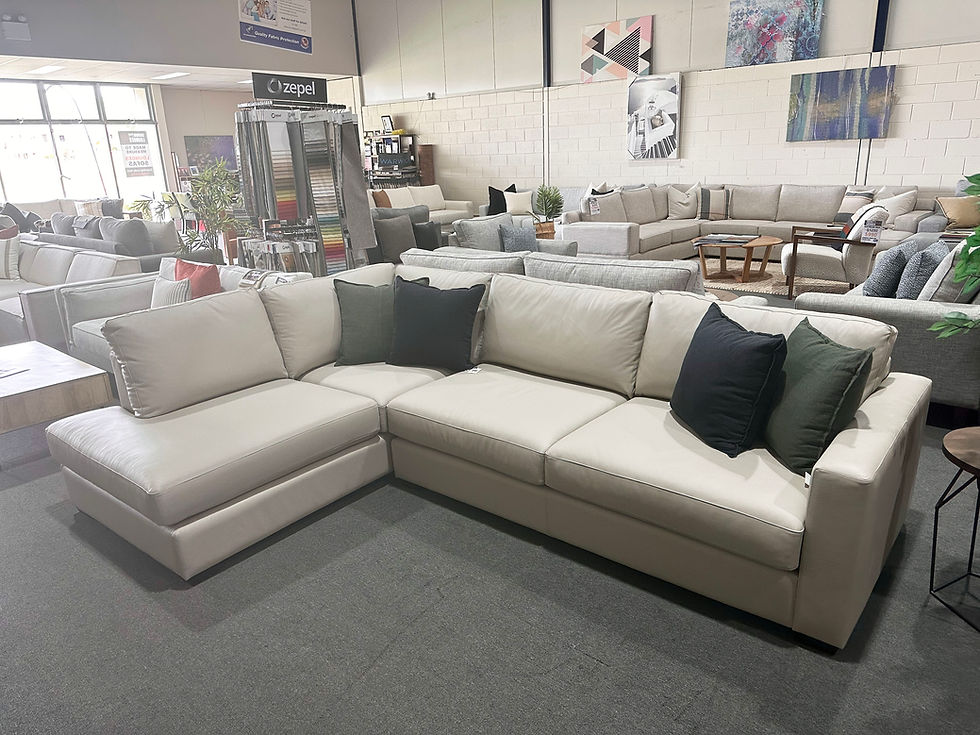
9 Tips to Maximise Comfort with a Double Chaise Lounge

Updated: Sep 7

A double chaise lounge works well in family rooms, media spaces and open-plan homes because two people can stretch out while standard seating remains through the centre. The real test is how the lounge feels after a few hours of use. Seat depth, chaise size, cushion construction and room layout all make a noticeable difference.
If you are comparing a double chaise lounge, these are the details worth checking before you buy.
1. Measure the room around the lounge
Start with the full width and depth of the sofa, including both chaise sections, then check the space around it. Doorways, coffee tables, side tables and main walkways all need enough clearance once the lounge is in place.
Mark the full footprint on the floor with painter's tape and walk around it. Open nearby doors and imagine both chaises occupied. This shows whether the room will still feel comfortable.
2. Choose the right seat depth
Seat depth affects how naturally you sit. Deeper seats often suit people who like to curl up, recline or sit with their legs tucked underneath them. Shallower seats can be better for someone who prefers sitting upright with both feet on the floor.
When testing a lounge, sit as you normally would at home. Your back should reach the rear cushion comfortably, and your legs should feel supported without forcing you into an awkward position.
3. Check the chaise length and width
A chaise should give you enough room to stretch out without leaving your legs unsupported. Sit back in your usual position and see where your heels land. If your feet hang well past the end, the chaise may feel short over longer periods.
Width matters too. Children, pets and partners often end up sharing a chaise, so look at the usable sitting area rather than relying only on the overall measurements.
4. Ask what is inside the cushions
Cushion construction can change the feel of a lounge considerably. Foam usually gives a firmer, more structured seat, while feather-wrapped or fibre-filled cushions tend to feel softer and more relaxed. Softer cushions may need regular plumping to maintain their shape.
Spend time trying each option. Sit in the centre, move to the chaise, lean back and get up again. Labels such as soft, medium or plush are only a starting point.
5. Think about how both chaise positions will be used
The two chaise sections may look identical on a floor plan, but they can work very differently in the room. One side might have the better view of the television, while the other could sit closer to a window, power point or side table.
Consider who usually sits where and whether both positions are practical. Check that neither chaise blocks a doorway, hallway or regular path through the room.
6. Choose upholstery for everyday use
Colour matters, but so do texture, durability and maintenance. Pets, children, food, direct sunlight and daily wear can all influence whether fabric or leather is the better fit for your household.
For fabric, ask about pilling, stain resistance and cleaning instructions. For leather, ask about the type, finish and care requirements. Touch the material and sit on it long enough to judge the feel.
7. Plan the furniture around the lounge
A large double chaise changes how the rest of the room works. A coffee table placed too close can reduce leg room, while one placed too far away becomes inconvenient for drinks and remotes.
Side tables can work well beside each chaise, especially in wider rooms. Also think about lamps, charging points and where people usually put phones, books or laptops. These small details make the seating area easier to use.
8. Use extra cushions where they help
Throw cushions are useful when they solve a specific comfort issue. A small lumbar cushion can give extra lower-back support, while a larger cushion can reduce seat depth for a shorter person. A pillow at the end of the chaise can also make lying down more comfortable.
Keep the number practical. If half the cushions end up on the floor every evening, they are probably taking up useful seating space.
9. Look after the seats that get the most use
Most households develop a favourite seat, and that position usually softens faster than the others. If the cushions are designed to be rotated or swapped, moving them periodically can help spread wear more evenly. Softer back cushions may also need occasional plumping.
Vacuum fabric and seams regularly, and treat spills according to the manufacturer's care instructions. The right maintenance helps the lounge keep its shape and feel for longer.
Choose a double chaise around your normal routine
Before ordering, picture a typical evening at home. Think about who stretches out, who sits upright, where the children or pets usually end up, whether everyone can see the television and whether there is still a clear path through the room.
Those everyday details are what make a double chaise lounge comfortable over the long term. When the dimensions, cushion feel, upholstery and layout suit the way your household actually lives, the sofa feels like it belongs in the room.
Explore Known For Lounges' range of chaise lounges and L-shaped sofas to compare different configurations for your space.